


DATE
January 6, 2026
CATEGORY
Blog
SHARE


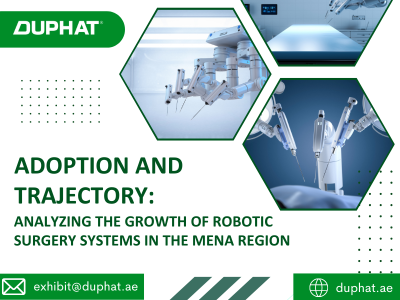
The healthcare sector across the Middle East and North Africa (MENA) is undergoing a profound and accelerating metamorphosis. Driven by ambitious national visions, unparalleled government investment, and a growing demand for world-class specialized care, the region is rapidly transitioning from a consumer of medical technology to a leader in advanced healthcare delivery. At the forefront of this digital revolution is the dramatic expansion of Robotic-Assisted Surgery (RAS).The adoption of state-of-the-art robotic systems—such as the globally dominant Da Vinci Surgical System and orthopedic platforms like Stryker’s Mako robotic arm—is no longer an exception but a strategic imperative for leading institutions in countries like the UAE, Saudi Arabia (KSA), and Qatar. This movement is not simply about acquiring hardware; it represents a fundamental commitment to maximizing surgical precision, enhancing patient outcomes, and optimizing the operational efficiency of complex hospital ecosystems.The market trajectory is clearly defined by exponential growth, particularly in the UAE, where interest in medical robotics has surged significantly. The focus has moved beyond early adoption in simple procedures to mastering complex, high-risk operations across multiple specialties, including urology, gynecology, cardiology, and orthopedics. This article delves into the transformative impact of RAS, analyzing how it redefines diagnostic accuracy, drives operational efficiencies, influences healthcare access, and illuminates both the challenges and the abundant opportunities lying ahead for the MENA healthcare landscape.
Diagnostic Accuracy and Precision Execution in Robotic-Assisted Surgery Expansion
The adoption of RAS fundamentally alters the operational definition of surgical accuracy by bridging the gap between pre-operative diagnostics and intra-operative execution. The core value of the robotic system lies in its ability to empower the surgeon with sensory and mechanical capabilities that far exceed traditional manual or laparoscopic techniques.
Enhanced Visualisation and Execution Fidelity
Robotic platforms, particularly systems like the Da Vinci, provide surgeons with a three-dimensional (3D) High-Definition (HD) vision system that offers a magnified view often up to ten times the natural size. This level of granular detail allows for unprecedented anatomical recognition, enabling surgeons to identify and preserve critical structures that might be obscured or simply too small to reliably distinguish during conventional open or 2D laparoscopic procedures. This is particularly crucial in fields like pelvic surgery (e.g., prostatectomy, radical cystectomy) and reconstructive procedures where the margin for error is minimal.
Furthermore, the robotic system’s articulated instruments, offering seven degrees of freedom (superior to the four degrees typical of laparoscopic instruments) and a filter to eliminate natural human hand tremor, translate into movements of exceptional precision. This stability and control directly influence diagnostic accuracy during the procedure itself—that is, the accuracy of the surgeon’s execution based on the pre-operative diagnostic imaging.
Pre-operative Planning and Predictive Outcomes
In orthopedics, the integration of robotics (such as the Mako system used widely in the UAE) showcases the true convergence of diagnostics and execution. Before a robotic-assisted hip or knee replacement, the patient undergoes a CT scan to create a detailed 3D virtual model of the joint. This model allows the surgeon to:
- Plan Implant Sizing and Positioning: The surgeon can accurately plan the implant size and position down to the millimetre and degree.
- Anticipate Functional Movement: The technology provides a unique opportunity to visualize and anticipate how the new joint will functionally move within the patient’s body, leading to better long-term biomechanical outcomes.
During the surgery, the robotic arm acts as a dynamic guide, ensuring the surgeon’s bone cuts and implant placement adhere precisely to this pre-operative digital plan. The ability to fine-tune the implant position by tiny increments dramatically reduces the risk of alignment errors, which are primary factors in long-term joint replacement failure. This digital fidelity, supported by KSA’s success in specialized complex cardiac and multi-valve surgeries, has contributed to improved patient outcomes and survival rates up to 98% in some cases, highlighting the direct link between robotic precision and clinical success.
Workflow and Operational Improvements in Robotic-Assisted Surgery Expansion
Beyond the immediate patient benefits, the strategic adoption of robotic surgery systems is driven by profound improvements in workflow and hospital operational metrics, addressing the economic burden often associated with long-term, complex care. Leading MENA hospitals view RAS not just as a clinical tool, but as a crucial instrument for institutional efficiency and return on investment (ROI).
Reduction in Complications and Hospital Stay
The minimally invasive nature of robotic surgery—characterized by smaller incisions, reduced trauma, and less blood loss—translates directly into streamlined post-operative workflows. In KSA, the King Faisal Specialist Hospital & Research Centre (KFSHRC) demonstrated the significant operational gains of its robotic heart surgery program:
- Reduced Recovery Time: Recovery times were reduced by approximately 30%.
- Reduced Resource Consumption: The need for blood transfusions, mechanical ventilation, and total hospital stay was cut by over 50% compared to traditional open methods.
When high-volume procedures can reduce a patient’s stay by half, it frees up critical hospital beds, increases patient throughput, and significantly improves bed utilization rates—a major operational challenge in high-demand healthcare systems.
Cost-Effectiveness and Resource Management
While the initial capital expenditure for robotic systems (such as the R38 million initial cost reported for one system in the region) is substantial, the long-term cost equation is favorable due to:
- Lower Total Episode of Care Cost: KFSHRC reported a cost reduction of 40% compared to traditional methods for their complex robotic cardiac surgeries. This saving is achieved through reduced complication management, fewer required resources (like ICU days and blood products), and shorter overall recovery periods.
- Optimized OR Utilization: As surgeons gain proficiency, the operating time for complex procedures decreases. Furthermore, the enhanced visualization and stability allow the surgeon to tackle more complex, high-risk cases with confidence, effectively expanding the institution’s surgical capabilities and revenue streams without requiring commensurate investment in additional physical infrastructure.
Multidisciplinary Centralisation
To maximize efficiency and recover the high capital investment, institutions in the MENA region are moving toward consolidating robotic surgery procedures into high-volume, multidisciplinary specialty centers. This model ensures the expensive technology is utilized across a wide range of specialties—from urology (where it was first adopted) to general surgery (hernia repair), gynecology (SSMC’s expansion), and oncology. This multi-specialty approach increases case loads, maximizes ROI, and promotes the development of highly specialized support teams, creating centers of excellence that attract regional and international patients seeking advanced care.
Addressing Healthcare Access and Disparities in Robotic-Assisted Surgery Expansion
The expansion of robotic surgery, initially an elite service, is gradually becoming a strategy for democratizing advanced care, albeit with inherent difficulties related to geographic and socio-economic access.
Shifting from Luxury to Standard of Care
The primary driver for the wide-scale adoption in the MENA region is growing patient demand for minimally invasive surgeries, which offer reduced pain, less scarring, and quicker return to work (sometimes as fast as two weeks in orthopedic cases). This demand forces private and public healthcare providers to invest in robotic capabilities to remain competitive and meet modern expectations.
In the UAE, government initiatives and strategic partnerships (like SSMC’s joint venture with Mayo Clinic) have been pivotal in introducing and expanding robotic services to the state sector, ensuring that the highest quality of care is accessible beyond just the affluent patient base. The success of these flagship public-private facilities sets a new standard, pressuring other institutions to follow suit and eventually reducing regional disparities in treatment quality.
Training and Capacity Building
A significant barrier to wider access is the shortage of appropriately trained surgeons. The MENA region is actively tackling this by prioritizing surgeon training and certification. Investment in training programs, workshops, and centers of excellence by technology providers and regional healthcare institutions is critical.
The Global Robotic MedTech Forum, hosted in Dubai, exemplifies this commitment, bringing together policymakers, industry leaders, and surgeons to accelerate knowledge transfer. By training more certified surgeons, the region is building the necessary human capital to support the wider deployment of robots into new institutions and countries, ultimately addressing the access disparity by increasing the overall treatment capacity. As new medical students are demanding robotic training in their curriculum, as noted by industry experts, this skill set will soon become a mandatory standard rather than an advanced elective.
Challenges and Opportunities Faced in Robotic-Assisted Surgery Expansion
The path to fully integrating RAS across the MENA region is rich with opportunity but remains obstructed by predictable challenges inherent to high-cost technology adoption.
Persistent Challenges: Cost, Training, and Regulatory Hurdles
- High Initial Capital Investment: The multi-million dollar price tag for a single system, plus the recurring cost of consumables and maintenance, poses a financial constraint, particularly for smaller or developing institutions outside of major economic hubs. While global competition is starting to drive costs down, affordability remains a primary hurdle.
- Human Capital Requirement: While training is an opportunity, it is also a challenge. The complexity of the technology requires surgeons to undergo rigorous, long-term training and certification. Insufficient numbers of specialized practitioners can lead to underutilized robotic systems, reducing the expected ROI. Furthermore, cultural resistance or a lack of inter-practitioner referrals (as observed in initial KSA reports) can slow the organic growth of case volumes necessary to sustain a robotic program.
- Infrastructure and Service: Deploying and maintaining these sophisticated machines requires specialized operating room infrastructure and a dedicated team of biomedical engineers and technical support staff, representing a non-trivial logistical and financial commitment.
Strategic Opportunities: Expansion and Technological Integration
- Expansion into New Specialties: Robotic surgery is expanding beyond its initial strongholds (Urology and General Surgery) into Orthopedics (Mako), Thoracic, and Gynecology (as seen at SSMC). The ability to perform complex, multi-quadrant procedures robotically represents a huge opportunity for market growth and superior clinical outcomes in oncology and reconstruction.
- Competitive Pricing and New Entrants: The dominance of first-generation systems like Da Vinci is increasingly being challenged by new, cost-effective competitive systems entering the market. This competitive pressure is expected to drive the cost of procedures down, making robotic surgery cost-effective and comparable to manual techniques—a key shift necessary for mass adoption.
- AI and Predictive Robotics: The future lies in fusing artificial intelligence (AI) with RAS. This includes AI-driven image recognition, pre-operative patient-specific risk modeling, and machine learning algorithms that assist the surgeon in real-time, potentially leading to fully autonomous or semi-autonomous tasks that further increase precision and efficiency. The UAE’s commitment to AI adoption suggests it is ideally positioned to capitalize on this next generation of robotic innovation.
Conclusion
The expansion of robotic-assisted surgery in the MENA region is a clear indicator of the region’s commitment to leapfrogging traditional healthcare models and embracing precision medicine. Institutions in the UAE, KSA, and Qatar are leveraging RAS to deliver tangible benefits: greater diagnostic accuracy translated into surgical precision, marked improvements in workflow efficiency and cost reduction through minimized hospital stays, and a mechanism for addressing access disparities via centralized centers of excellence and robust training programs.
While the market must still navigate challenges related to high capital costs and the critical need for surgeon expertise, the trajectory is undeniably positive. As new competitive systems enter the market and technological integration with AI deepens, robotic-assisted surgery is poised to become the undisputed standard of surgical care, establishing the MENA region not just as a hub for advanced technology, but as a global benchmark for innovative and efficient healthcare delivery.


